Fellows
Pablo Jimenez Arandia
Fellow Algorithmic Accountability Reporting

Pablo is a freelance journalist specialized in the social and political impact of technology. He's the head behind several investigations on the use of AI and algorithms in the public and private sector, in which he worked with Lighthouse Reports, the American author Virginia Eubanks, and the government of Catalonia. He has also produced two documentary podcasts on the topic and has worked for the International Telecommunications Union (ITU). He is a regular contributor to Spanish outlets like El Confidencial and El Salto Diario and has also published previous research with AlgorithmWatch. During his fellowship, he will focus on discriminatory insurance practices in Spain.
Maryam Ahmed
Fellow Algorithmic Accountability Reporting

Dr Maryam Ahmed is an award-winning Senior Data Scientist and Journalist at BBC News. She holds a PhD in engineering from the University of Oxford. Maryam's recent work has exposed algorithmic bias, online climate disinformation, and predatory debt advisors. In 2021, she won the Royal Statistical Society Award for Investigative Journalism. As a Google News Initiative Fellow, Maryam has developed AI driven tools to scrutinize politicians' financial interests. She has also published an analysis of Munich's housing market with the Süddeutsche Zeitung. Alongside her journalism, she has lectured in Python for Data Science at University College London and Kings College London.
Yasir Gökce
Fellow Algorithmic Accountability Reporting

Dr Yasir Gökce is the director of the Institute for Diplomacy and Economy (instituDE), an independent, research-driven NGO headquartered in Brussels. He received a PhD from Bucerius Law School in Hamburg, Germany. In his thesis, he inverstigated the intricate nexus of law, cyberspace, and information security. He also holds an MPA degree from Harvard University, an LL.M. degree from Ankara University, and an LL.B. degree from Bilkent University. Gökce was an in-house legal counsel in the International Law Department of the Turkish foreign service and has extensive diplomatic experience in various countries. Before and after his tenure in diplomatic service, he worked as an attorney and expert in information security. Currently residing in Germany, he is actively engaging in research, delving into subjects such as international human rights law.
Sara Kezia
Fellow Algorithmic Accountability Reporting

Sara is a freelance researcher and a communications expert. Currently, she's pursuing her postgraduate degree at Tampere University. For her PhD, she investigates digital borders and everyday surveillance in the South West Asia and North Africa region. Previously, Sara has worked as a communications consultant, leading different research projects and the communications planning. She has engaged in diverse European and Middle Eastern research projects related to migration, human rights, technology, and media. As a Fellow at AlgorithmWatch, Sara will investigate what impact electronic IDs and the access to banking services have on human rights for foreigners and people with precarious legal status.
Maja-Lee Voigt
Fellow Algorithmic Accountability Reporting

Maja-Lee is a urban researcher, PhD student at the Leuphana University Lüneburg, and co-founder of the interdisciplinary city research collective Akteurinnen für urbanen Ungehorsam in Hamburg, Germany. Assisted by a methodological toolbox of ethnographic and critical feminist thinking, she is currently researching Amazon’s monopoly on bits, bytes, and boxes. Overall, Maja-Lee’s work focuses on the automation of logistics in cities, tackling questions about (resisting) algorithmic architectures of oppression and hacking patriarchy towards more just urban futures.
Mathana
Fellow Algorithmic Accountability Reporting

Mathana is a Berlin-based ethicist, philosopher, activist, and storyteller. Their work examines the socio-cultural impact of AI and automated bias, ethics-based approaches to responsible AR/VR design and development, and the nascent proliferation of weaponized robotics in society. Mathana is the co-founder of the AI transparency project xplainr and has chaired the IEEE Standard Association's Global Initiative on the ethics of Extended Reality, where they brought together researchers and experts across industrial applications to facilitate the publication of cohesive best-practice recommendations for more socially responsible AR/VR/metaverse technologies. They also worked on creating harm-reduction frameworks within technical standards development around algorithmic bias and emotion recognition algorithms. During the fellowship, they will investigate applications of emotion recognition and detection algorithms in the European finance sector.
Samuel Hufschmid
Former Fellow Algorithmic Accountability Reporting

Samuel works as journalist for Bajour, an online media startup in Basel. He studied journalism in Hamburg and Luzern and worked for different newspapers. His fields of expertise are data journalism and crowd journalism. He was the project lead for the “Who Owns Basel” research which was published at Bajour in 2021. For his data story about cheating in the Swiss national sport "Schwingen" (a version of wrestling), he was awarded the third place in the Swiss press award competition in 2023.
Stavros Malichudis
Former Fellow Algorithmic Accountability Reporting

Stavros is a reporter and editor for Solomon, a Greek investigative outlet. He has worked for Agence France-Presse, has participated in cross-border investigations with Lighthouse Reports and Investigate Europe, and his work was published in major media in several European countries. He was shortlisted for the European Press Prize 2021 and won the IJ4EU Impact Award 2022. In 2019, he was selected as a fellow for BIRN's Balkan Fellowship for Journalistic Excellence (BFJE). He also was a fellow in data journalism at Columbia University in New York.
Mathilde Saliou
Former Fellow Algorithmic Accountability Reporting

Mathilde is a French journalist specialized in digital issues. A graduate of Sciences Po Paris, she has worked for The Guardian, RFI, 20 Minutes, Les Inrocks, Next INpact, and others. In 2023, she published the book Technoféminisme, comment le numérique aggrave les inégalités ("Technofeminism, how digital technology is exacerbating inequalities") with the French publishing house Grasset.
Alina Yanchur
Former Fellow Algorithmic Accountability Reporting

Alina has specialized in data and investigative journalism. She has bylines with Euronews, EUobserver, and AlgorithmWatch. With a team of colleagues from Germany, the Netherlands, and Sweden, she investigated the lobbying on the landmark EU proposal to regulate Artificial Intelligence, and found that it was designed to promote a widespread use of the technology in the public sector. As an AlgorithmWatch fellow, she will focus on researching the use of algorithms in courts and the mental health sector.
Naiara Bellio
Reporter
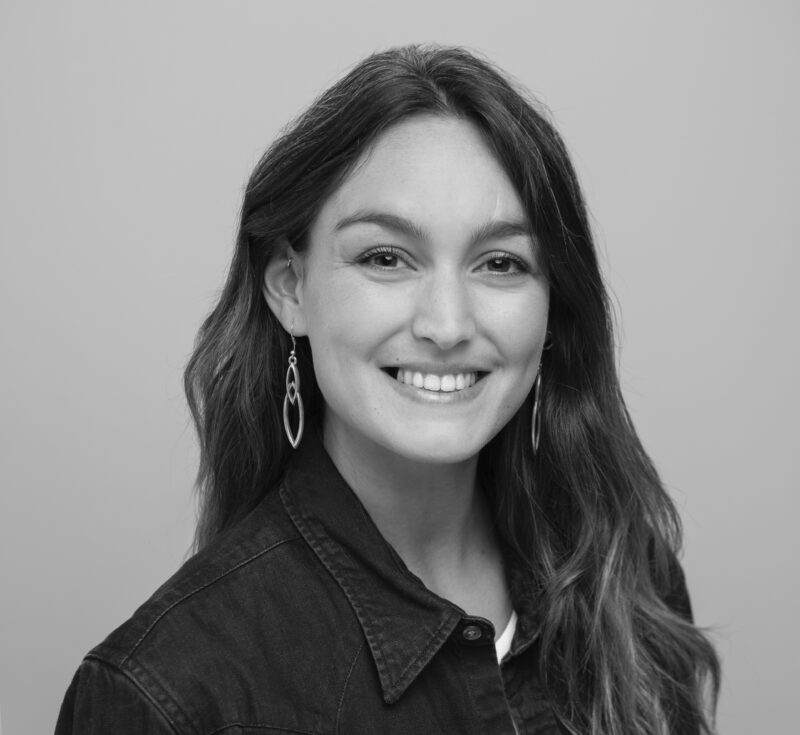
Spanish, English
bellio@
Naiara Bellio covers the topics privacy, automated decision-making systems, and digital rights. Before she joined AlgorithmWatch, she coordinated the technology section of the Maldita.es foundation, addressing disinformation related to people's digital lives and leading international research on surveillance and data protection. She also worked for Agencia EFE in Madrid and Argentina and for elDiario.es. She collaborated with organizations such as Fair Trials and AlgoRace in researching the use of algorithmic systems by administrations.
Pierluigi Bizzini
Former Fellow Algorithmic Accountability Reporting

Pierluigi is a freelance journalist and editor. He covers social issues in Mediterranean countries. He’s one of the co-authors of Bagliore (Il Saggiatore, 2020) and editor at The Syllabus, a knowledge curation platform, and Alea, an independent anthropology magazine. With a background in computer science, he has always been interested in the social implications of automated systems, especially those that impact and harm the rights of migrants, minorities, and the poorest.
Nathalie Koubayová
Former Fellow Algorithmic Accountability Reporting

Nathalie is a PhD student with an academic interest in chatbots. She holds a research master’s degree in Communication Science from the University of Amsterdam. Her current research revolves around users’ responses to different framings of disclosure of customer care chatbots’ identity. During her fellowship at AlgorithmWatch, she looked into the use of chatbots in mental health, automatic fact-checking, and the digitization of the agricultural sector.
Dr. Jennifer Krueckeberg
Former Fellow Algorithmic Accountability Reporting

Jennifer has recently completed an EU-funded PhD in anthropology in which she explored how digital media affect young people’s personal memory practices. Before embarking on her PhD, she worked as Lead Researcher at a London-based non-profit organization researching facial recognition, data exploitation, and surveillance in schools. As part of her fellowship, Jennifer investigated the impacts of algorithms on education, surveillance, and people’s everyday lives.
Kave Noori
Former Fellow Algorithmic Accountability Reporting

Kave is a human rights lawyer, loves ethical technology, and knows a lot about data protection law. He works with organizations for people with disabilities and writes articles for the Swedish Data Protection Forum. His fellowship project was to study deaf and hard-of-hearing people's views on “robot interpreters” and the ethical concerns that come with using them. He also wrote about why social sciences should be part of technical education.
Sonja Peteranderl
Former Fellow Algorithmic Accountability Reporting

Sonja is a journalist and the founder of BuzzingCities Lab, a think tank focusing on urban violence and technology. She was an editor for DER SPIEGEL and WIRED Germany and a freelance foreign correspondent. During her fellowship, she investigated algorithmic systems in policing/security, the impact of AI on the visibility of marginalized communities, and the role of automated systems in the context of gender-based violence.