#publicsphere (25 results)

The year that was not saved by automated systems – 2021 in review

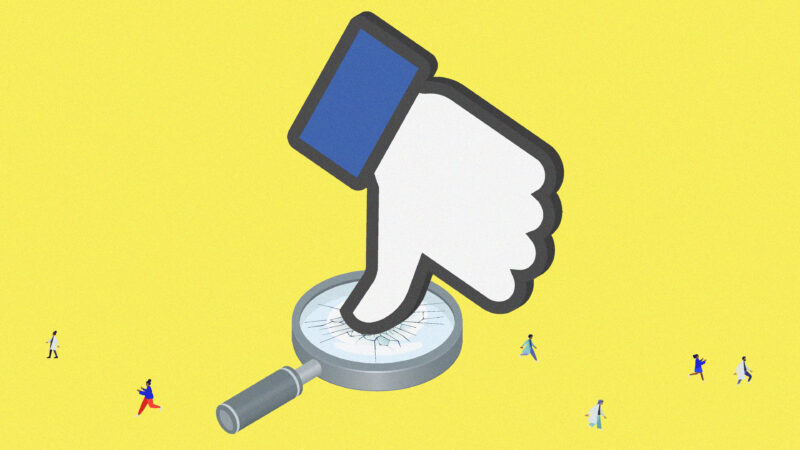
A climate catastrophe in Germany and the revelations of the Facebook Files had one thing in common: the humans in the loop failed to take the right decisions. 2021 was not the year algorithms were reined in, but 2022 might be.

DSA milestone: EU lawmakers have responded to our calls for meaningful transparency for big tech

Over the last months, AlgorithmWatch – supported by dozens of civil society organizations and researchers, and over 6.000 individuals – has advocated for using the Digital Services Act (DSA) to enable meaningful transparency into the way online platforms influence our public sphere. The vote in the European Parliament today shows that our work has made an impact.

Inside Poland’s stay-at-home “selfie” app

The Polish government's mandatory "Home Quarantine" app was supposed to replace home police visits. Users say it is a joke.

Holding platforms accountable: The DSA must empower vetted public interest research to reign in platform risks to the public sphere

The negotiations on the Digital Services Act (DSA) are now at a critical juncture. We have written an open letter to all IMCO Committee Members of the European Parliament asking them to empower a broad base of vetted public interest researchers whose independent scrutiny is vital to holding large tech platforms accountable. It has been signed by 22 international academics and independent researchers and 29 civil society organisations.

Facebook goes after the creator of InstaPy, a tool that automates Instagram likes

Facebook sent a cease-and-desist letter to Tim Grossmann, the creator of InstaPy, and blocked his accounts – and those of his start-up – on the platform.

Marine National Park

National parks near Marseilles deploy automated, live video surveillance against poachers

Two national parks in southern France want to automate the detection of poachers, but the efficacy of these systems remains unclear.

Domestic COVID certificates: what does the evidence say?

Born to help reopen international travel routes, digital COVID certificates are now required in several countries to enter premises such as bars, restaurants, gyms, pools, and museums, and to attend large public events. But do they work — and what for, precisely? More fundamentally, is it even possible to have an evidence-based debate about them at all? Tracing The Tracers looked at the lessons we should learn from the available literature, with the help of a stellar group of researchers.

YouTube cleaned its ‘news’ section… with content from Axel Springer

First findings of a data donation experiment by AlgorithmWatch show that Die Welt, a conservative news outlet from the German media conglomerate Axel Springer, dominates the news section.

Instagram algorithm: Süddeutsche publishes results of data analysis

Using thousands of data donations from AlgorithmWatch’s Instagram monitoring browser plug-in, German newspaper Süddeutsche Zeitung showed that posts from the far-right appear higher on users’ timelines.

How Big Tech Charms and Bullies European Politicians, Journalists and Academics

Google, Facebook and other very large tech companies built a lobbying system that, under the guise of furthering research or journalism, binds intellectuals in a complex network of patronage. Transparency is long overdue.

Twitter’s algorithmic bias bug bounty could be the way forward, if regulators step in

Twitter opened its image cropping algorithm and gave prizes to people who could find biases in it. While interesting in itself, the program mostly reveals the impotence of regulators.

Under Facebook’s thumb: Platforms must stop suppressing public interest research

Sign our petition to protect future research on online platforms!

AlgorithmWatch forced to shut down Instagram monitoring project after threats from Facebook

Digital platforms play an ever-increasing role in structuring and influencing public debate. Civil society watchdogs, researchers and journalists need to be able to hold them to account. But Facebook is increasingly fighting those who try. It shut down New York University’s Ad Observatory last week, and went after AlgorithmWatch, too. The European Parliament and EU Member States must act now to prevent further bullying.

Making sense of digital contact tracing apps for the next pandemics

In an interview with AlgorithmWatch, Prof. Susan Landau discusses why we need to resist fear in the face of pandemic uncertainty and the normalization of health surveillance technologies — and why the time to have a broad democratic discussion about their future uses is now.

DataSkop: Investigating YouTube’s algorithm during Germany’s election campaign

Which videos does YouTube's recommender system suggest to users during the german election campaign? The new data donation platform “Dataskop” developed by AlgorithmWatch is helping researchers and journalists investigate how users' watch histories influence the platform’s recommendations and search results. From 15 July until 25 August, users can donate their data and explore the algorithm in data visualization experiments.

Digital contact tracing apps: do they actually work? A review of early evidence

Throughout the COVID-19 pandemic, many smartphone apps were launched to complement and augment manual contact tracing efforts without a priori knowledge of their actual effectiveness. A year later, do we know if they worked as intended? An analysis of early evidence—from both the literature and actual usage—by AlgorithmWatch finds that results, so far, are contradictory and that comparability issues might prevent an informed, overall judgment on the role of digital contact tracing apps in response to the COVID-19 pandemic altogether.

Open letter calling for a global ban on biometric recognition technologies that enable mass and discriminatory surveillance

AlgorithmWatch and AlgorithmWatch Switzerland are joining 177 civil society organizations, activists, technologists, and other experts around the world to call for an outright ban on uses of facial recognition and remote biometric recognition technologies that enable mass surveillance and discriminatory targeted surveillance.

EU Commission asks foxes to stop eating chickens but does not build fence

The European Commission published a "Guidance on Strengthening the Code of Practice on Disinformation" aimed at large tech companies on Wednesday. The wish-list of measures forgoes any enforcement mechanism.

“We’re looking for cases of discrimination through algorithms in Germany.”

The project AutoCheck investigates the risks for discrimination inherent in automated decision-making systems (ADMS). In this interview, project manager Jessica Wulf talks about the search for exemplary cases and how the project will support counselling centers and further education on the topic.

Image classification algorithms at Apple, Google still push racist tropes

Automated systems from Apple and Google label characters with dark skins “Animals”.

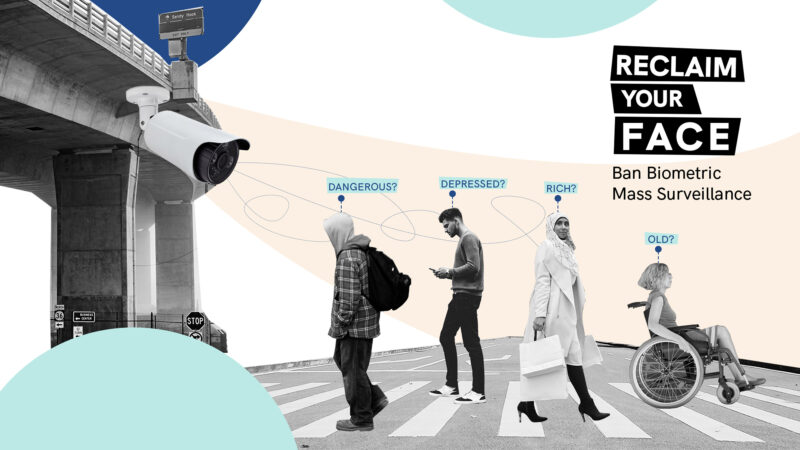
Reclaim Your Face – A European Citizens Initiative to ban biometric mass surveillance

A large coalition of civil society organizations, among them AlgorithmWatch and AlgorithmWatch Switzerland, have come together in a European movement that demands a ban on biometric recognition systems that enable mass surveillance. Join us and sign the European Citizens Initiative, calling on the EU to ban biometric mass surveillance - such as automated face recognition in public spaces!

Automated translation is hopelessly sexist, but don’t blame the algorithm or the training data

Automated translation services tend to erase women or reduce them to stereotypes. Simply tweaking the training data or the models is not enough to make translations fair.

Automating Society 2020 – Country issues Germany, France, Italy, Switzerland & Spain

Find all country issues of the Automating Society 2020 report and videos of the launch events on this page.

Politicians can do well on Instagram. Political posts, less so.

An experiment by AlgorithmWatch, Groene Amsterdammer, Pointer and NOS in the Netherlands shows that Instagram probably prioritizes images of faces and pushes down images that contain text.

In Berlin, Google Maps and TomTom encourage car drivers to disregard the law

Routing services from TomTom and Google Maps encourage car drivers to use cycle streets, which is illegal. Both companies said they would update their databases, but this is unlikely to completely solve the problem.

Page 3 of 6